Bird spikes are often the first thing people reach for when pigeons move in under their solar panels. Unfortunately, they rarely solve the problem. Here is why, and what works instead.
Key points
- Spikes stop birds perching on narrow ledges – they don’t block the gap under a panel.
- Pigeons land on the roof tiles next to the spikes and walk straight underneath.
- Covering a whole roof in spikes is costly, unsightly and still leaves gaps.
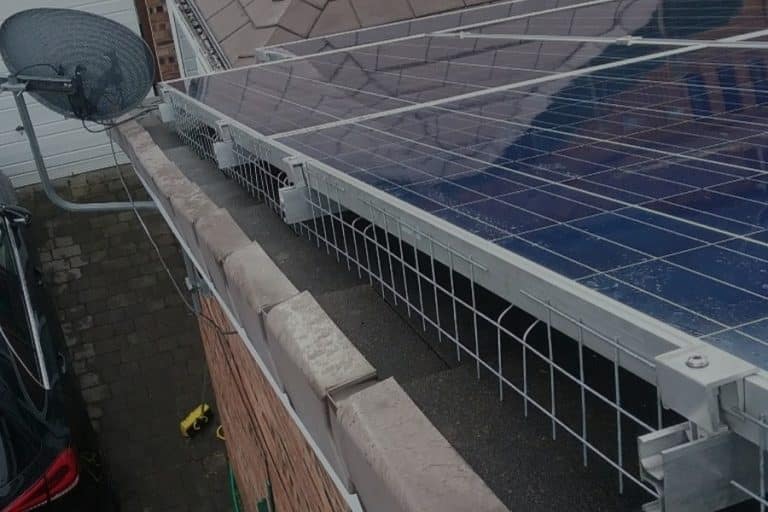
- Mesh fitted around the edge of the array closes the gap for good.
What bird spikes are designed for
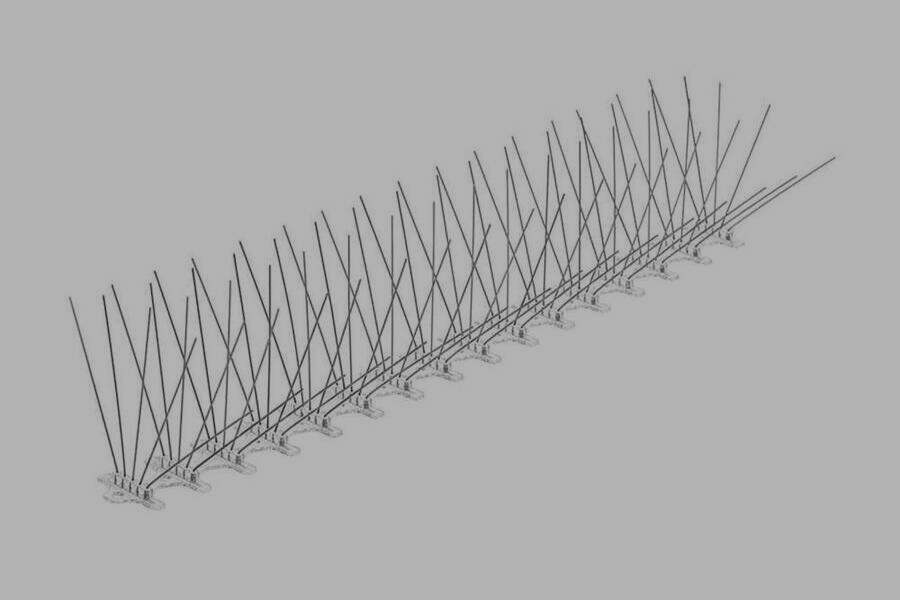
Bird spikes are rows of blunt plastic or stainless steel rods. They work well on narrow surfaces such as window ledges, signs, beams and street lights, where a bird needs a flat place to land. The spikes take that flat surface away without harming the bird.
Why spikes don’t work on solar panels
Pigeons don’t nest under solar panels because they can perch on the edge. They nest there because of the sheltered gap between the panels and the roof. Spikes do nothing to close that gap.
- Plenty of landing space. Even with spikes along the panel edge, pigeons simply land on the open tiles beside or below the array and walk underneath.
- Pigeons are persistent. Once a pair has nested, they will push past or between spikes to get back to the same spot.
- Debris builds up. Leaves and nest material collect in the spikes, giving birds an even better platform.
- Fixings can cause damage. Spikes stuck or screwed to the panel frame can affect your installer’s warranty.
The only way spikes could keep pigeons off a solar roof is to cover almost every surface of the roof with them – expensive, unsightly and still not guaranteed.
What works instead: solar panel mesh
The proven fix is to close the gap. Galvanised or PVC-coated mesh is cut to size and clipped to the panel frames all the way around the array, so birds can’t get underneath. There is no drilling into the panels or roof, air still circulates, and from the ground it is barely noticeable.
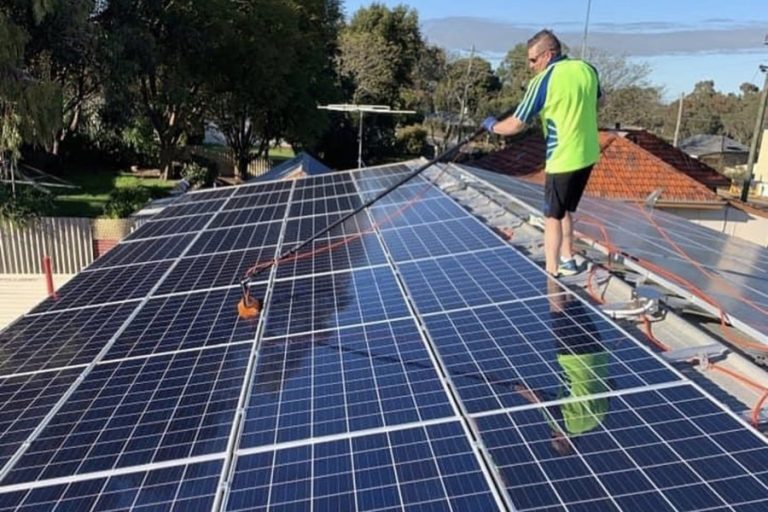
Before the mesh goes on, any nests, debris and droppings are removed from under the panels and the area is cleaned. Our solar panel pigeon proofing comes with a 10-year guarantee.
Other deterrents – do they work?
- Plastic owls and hawks: pigeons get used to them within days.
- Reflective tape and spinners: a short-term distraction at best.
- Ultrasonic devices: little evidence they deter pigeons on an open roof.
- Gel and repellents: messy, short-lived and not suitable near panels.
These can have a place elsewhere on a building, but for birds nesting under solar panels, mesh is the long-term answer. Read more in do solar panels need bird proofing?
Frequently asked questions
Can spikes and mesh be used together?
Yes. Mesh closes the gap under the panels, and spikes can be added to nearby ledges, chimneys or dormers where birds like to sit. We can advise on this when we quote.
How much does mesh cost compared with spikes?
Most UK homes pay between £350 and £1,200 for professional mesh proofing, depending on the number of panels and roof access. See our guide to the cost of pigeon proofing solar panels.